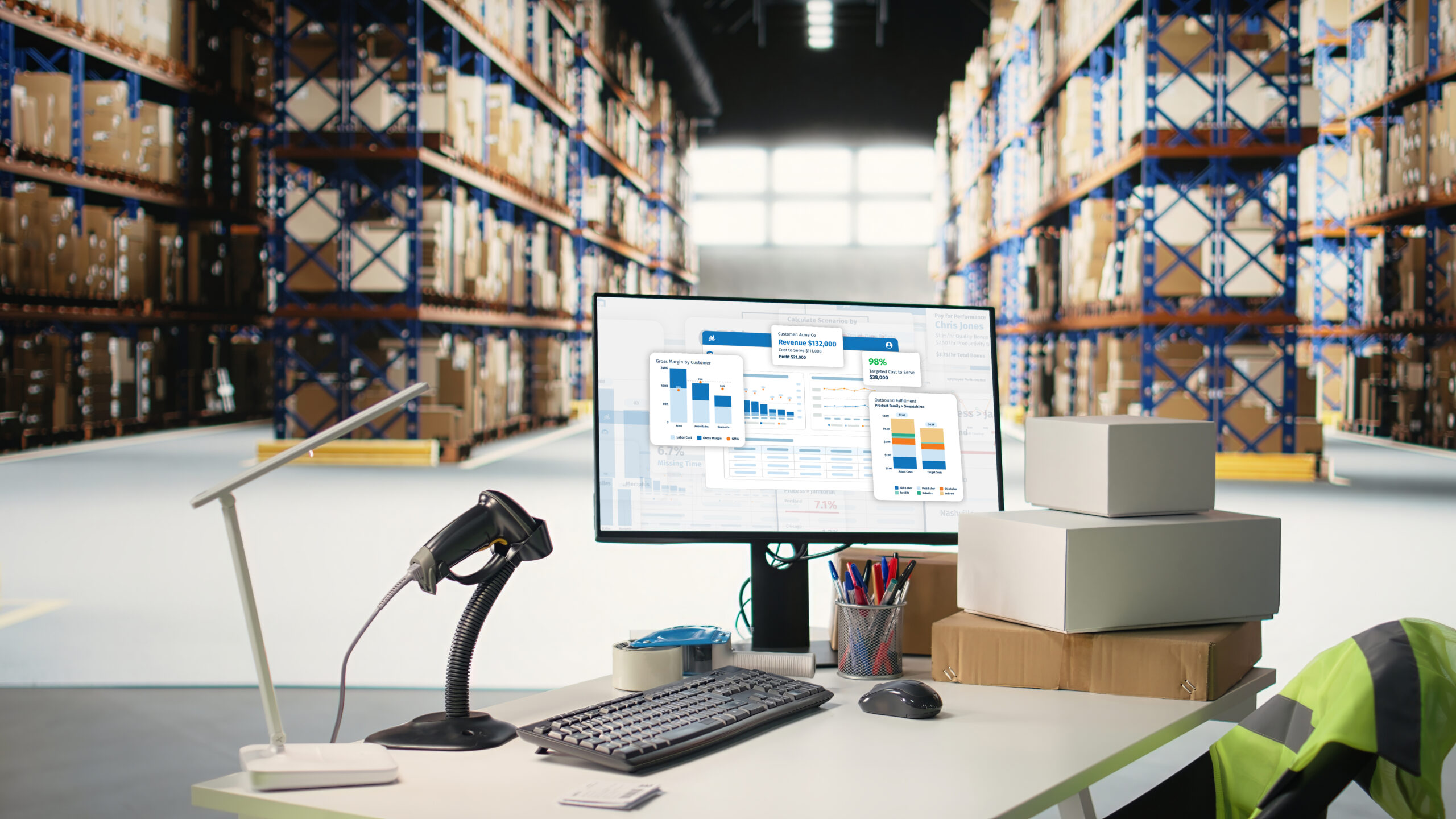
Easy Metrics is a warehouse performance management platform that unifies operational, labor, and financial data into a single, real-time view to align execution with financial outcomes and drive consistent, measurable performance across the network.
Explore Easy Metrics solutions by outcome, industry, or role. See how to connect operational, labor, and financial data to improve efficiency, drive measurable results, and align execution with business performance.
Get answers to our most common inquiries regarding our company, platform, and warehouse solutions.

3PLs face rising labor costs, complex customer requirements, and rate structures that don’t reflect the true cost of service. Without visibility into daily operating margins, providers struggle to pinpoint which customers or workflows are driving losses. This brief outlines how real-time cost-to-serve analytics can transform how 3PLs manage profitability—featuring insights from the Profit Management, the Easy Metrics solution trusted by top logistics operators.

Digital transformation has increased the complexity, customizability, and volume of customer requirements and requests. It’s unclear what truly influences your labor costs between customers, product types, and processes. Productivity metrics in isolation no longer work. What’s needed now is to break down labor cost and performance into standard metrics that account for workflow variance, and that capture 100% of team hours.

As a 3PL, identifying profit leaks is essential to staying competitive. This e-book provides actionable strategies to tackle the profitability challenges 3PLs face today. Discover how to price more effectively, eliminate unprofitable workflows, and improve operating margins by up to 3%—all while building customer trust and enhancing transparency.

Traditional LMS’s are slow and expensive to implement. Find out how choosing a cloud-first LMS like Easy Metrics can set you on the path to a successful Labor Management implementation, by quickly getting up and running to optimize your labor costs.

There are 7 key operational mistakes that most warehouses struggle with at some point. These challenges can be dangerous because they lead to out of control labor costs. From not measuring individual employees' performance, to lackluster workforce culture, to invisible indirect and missing time – we’ve seen them all.

The modern operations environment is changing rapidly in light of demand changes and labor shortages. Finding workers to compete in this environment is challenging—high turnover rates and low hiring rates both make filling and shipping orders difficult. Costs are irrelevant if nobody is there to move product.

Labor standards are a critical component of any efficient operation The traditional engineered approach, while familiar, comes at a higher cost (up to $100,000) and a longer development and implementation time. Use machine learning and advanced computing tools to develop labor standards faster, more efficiently, and with precision. Discover how you can use Easy Metrics to develop your labor standards and apply them to your labor management practices.

A common challenge when comparing operational performance is normalizing the data between those operations. Frequently, multi facility networks have dissimilar data sources. Normalizing these disparate data sources is the key to apples-to-apples comparison.

Globalization and the growing reliance on digital technology have radically shifted customer needs and expectations. These customers want faster delivery, customization to fit their needs, and a wide variety of products and services—all things that have led to increased costs. Identifying your Cost to Serve per customer, product, equipment, and employee is the first step to tackling your biggest cost savings opportunities.

Modern operations are fast paced and customer focused. The ability to track time, efficiencies, productivity and other operations metrics is invaluable. That’s what allows operations managers and warehouse supervisors to make wise hiring, scheduling, and budgeting decisions to manage costs and spearhead growth initiatives. A labor management system can help you get there.

Measuring productivity starts with your process KPIs. Only then can you communicate those goals to your workforce. Once you’ve established a set of standards to judge performance against, you can use them to reward your top performers and coach anyone falling behind.

The rise of e-commerce has created new distribution requirements that traditional manufacturing distribution, and increasingly wholesale distribution, have struggled to meet. Traditional WMS and ERP systems are not set up to handle eaches - a single unit pulled form a case pack. It's too difficult to accurately track fulfillment costs, reverse logistics add costs, and the burden is falling on operations teams to sort it out.

Today's operations leaders overwhelmingly name labor - that is, recruiting and retaining the best talent and managing the efficiency of their employees and teams - as their top priority. But today's complex customer requirements and fulfillment variability means that everything is in flux. When everything is changing, it's too hard to get an accurate view into when, how much, and where you need labor at any given time.

The challenge of improving an operation’s productivity can be overwhelming. Modern warehouse teams are expected to achieve high levels of performance, to meet budgets and run a profitable operation no matter how difficult the product mix – without sacrificing quality or safety.