Know what distribution should cost. And what it really costs.
Replace warehouse cost averages with activity-based costs that reflect actual volume, product mix, order complexity, and fulfillment requirements. Give Finance and Operations a shared view of distribution performance—and understand how logistics decisions affect product and channel profitability.
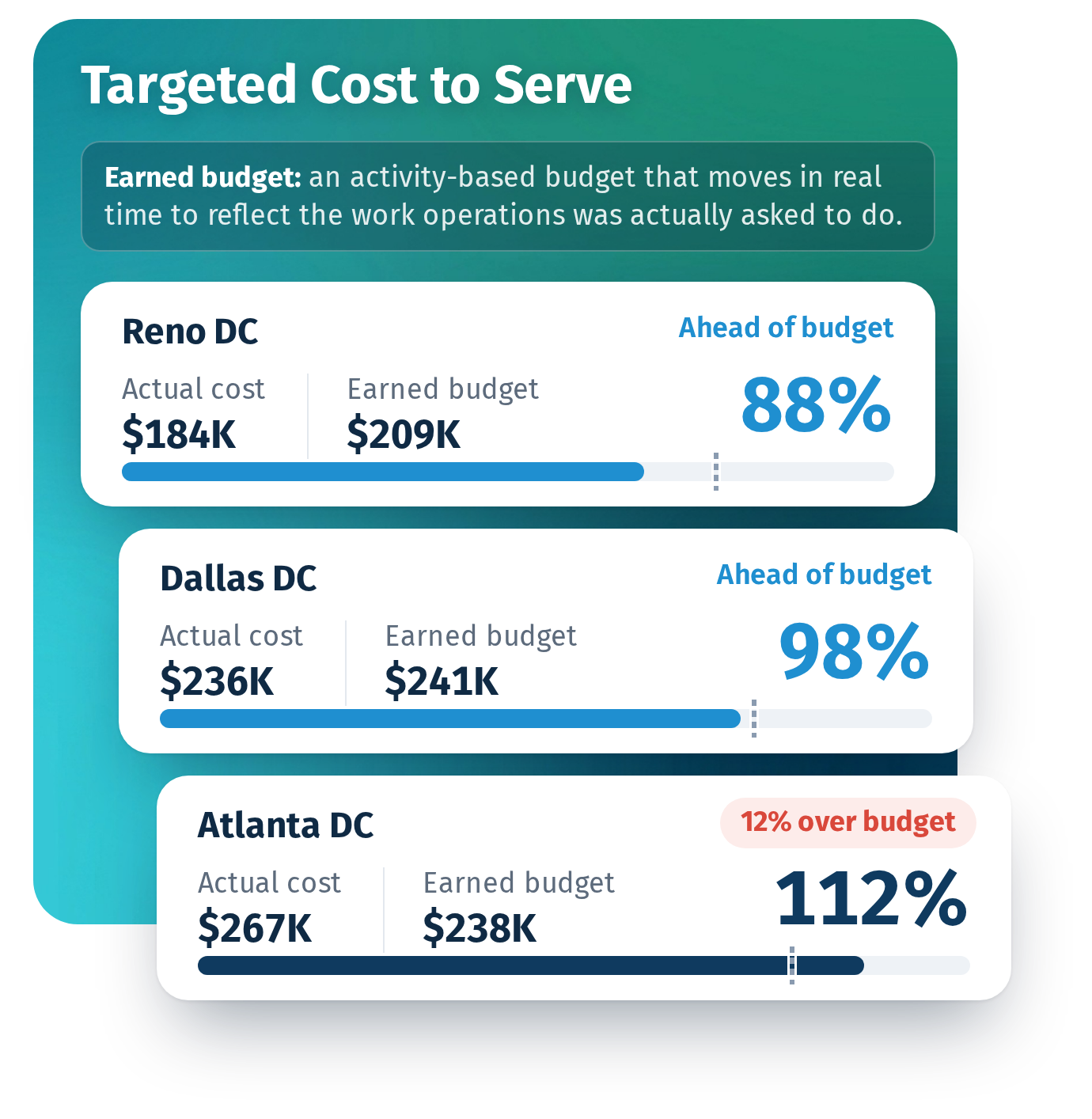
Targeted Cost to Serve One metric to govern your entire network
Give your leadership team a single workload-adjusted metric that moves automatically as the workflow changes. You manage to the actual workflow you are given now—not last quarter’s assumptions.
What can you do with Targeted Cost to Serve?

Level 1
Facility
“What’s driving the variance?”
One number per building. Is this facility earning its budget or burning through it? Compare sites fairly—each target reflects that facility’s actual workload.

Level 2
Customer / product family
“Where is margin eroding?”
For Wholesale operations, see cost performance by customer. For Shippers, by product family. Know where you’re making money and where you’re losing it.

Level 3
Process
“What’s driving the variance?”
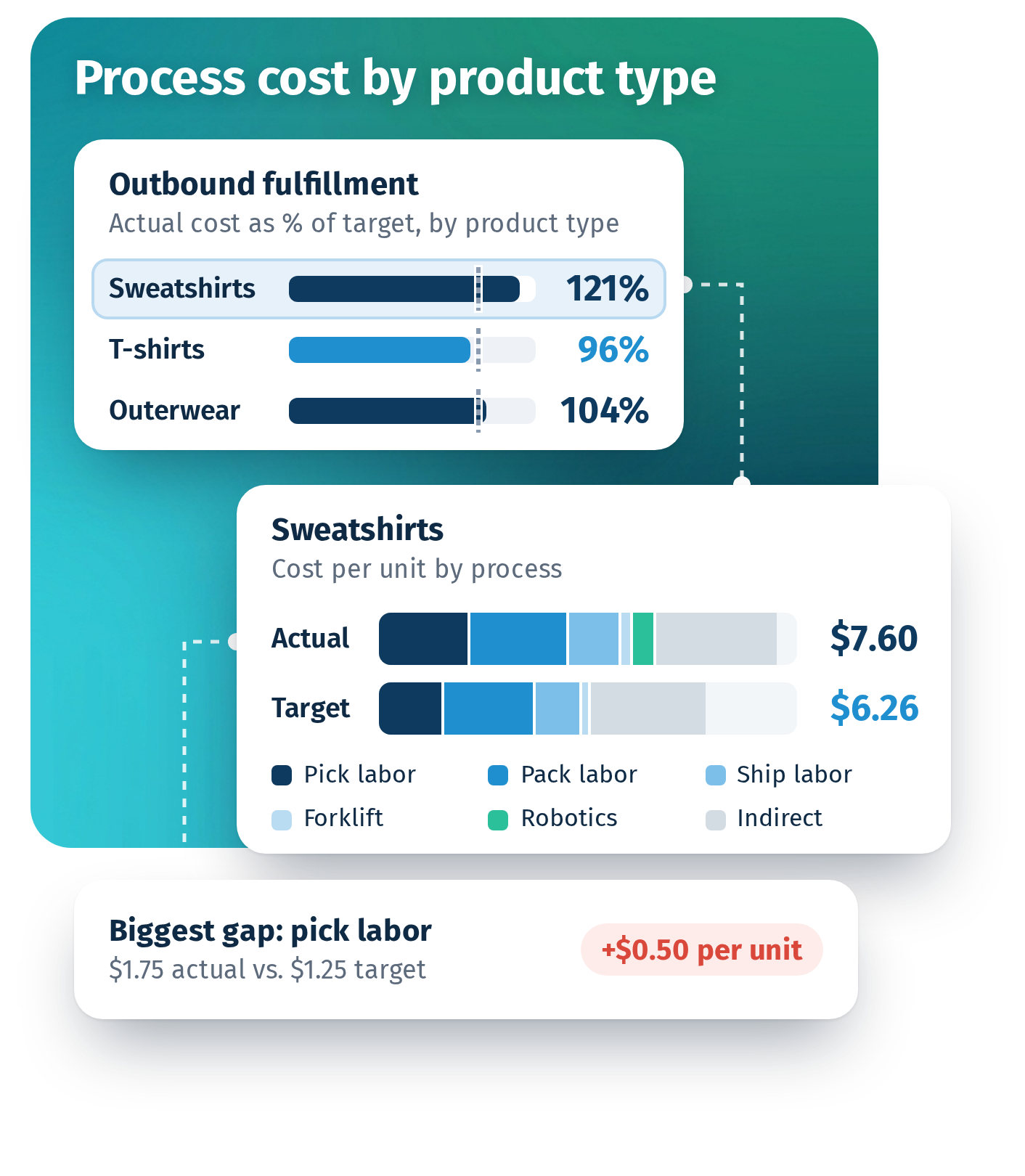
Drill into the specific operations driving a cost overrun. See in real time whether the cause is productivity, overtime, missing time, rush orders, or order profile shifts.
Manage cost performance with one metric
Targeted Cost to Serve gives Finance and Operations one workload-adjusted measure of cost performance across the warehouse network. Compare actual costs to what the work should have cost, benchmark facilities fairly, and drill into customers, product families, and processes to find what’s driving the variance.
Understand distribution costs by product and order profile
See how product types, handling requirements, order quantities, and fulfillment complexity change the cost of moving products through your network. Use these insights to inform pricing, packaging, and product decisions.
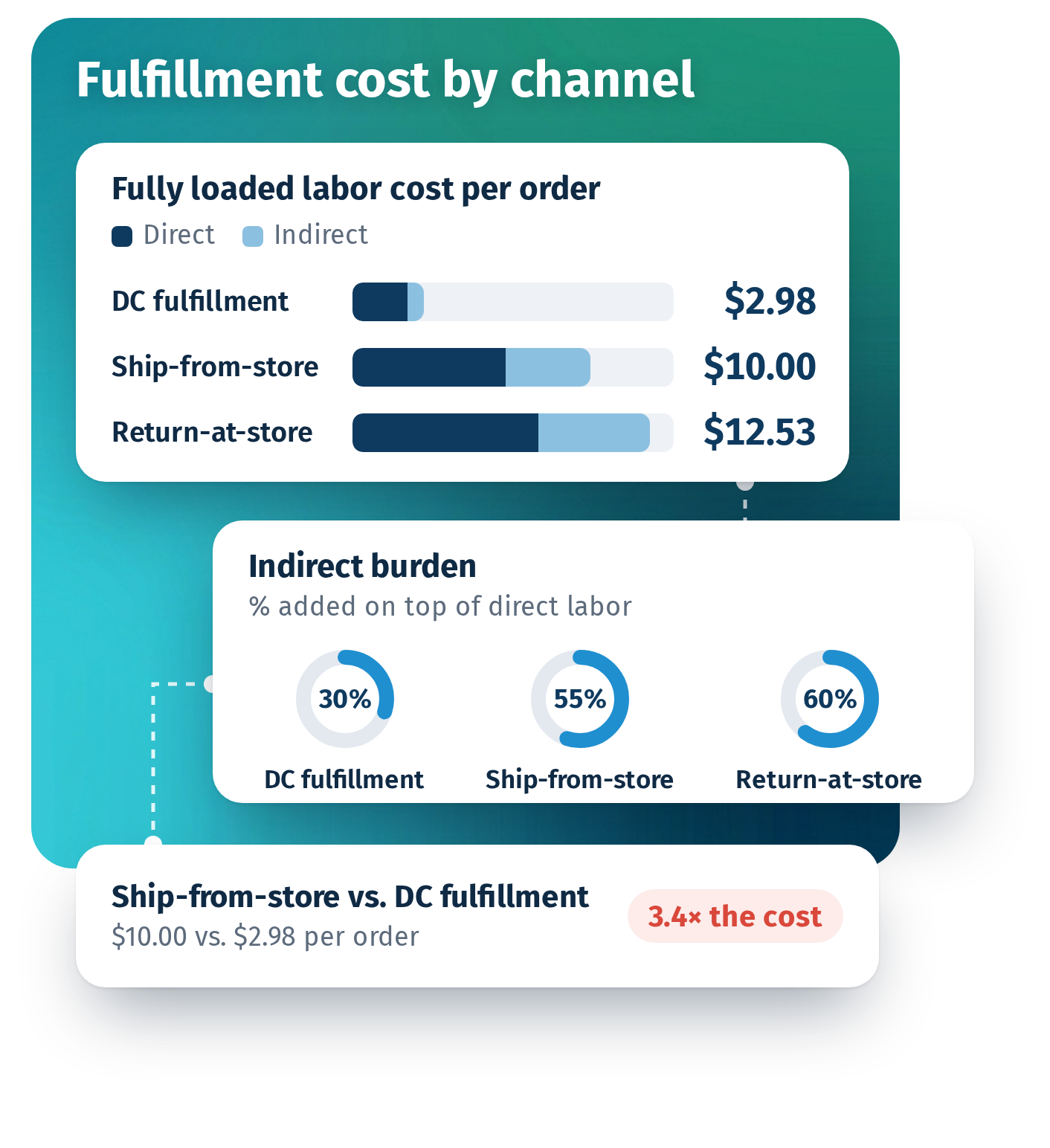
Compare fulfillment costs across channels and locations
Understand the operating economics of DC fulfillment, ship-from-store, and retail returns. Compare the actual warehouse and store-handling costs behind each fulfillment approach to inform channel and sourcing decisions.
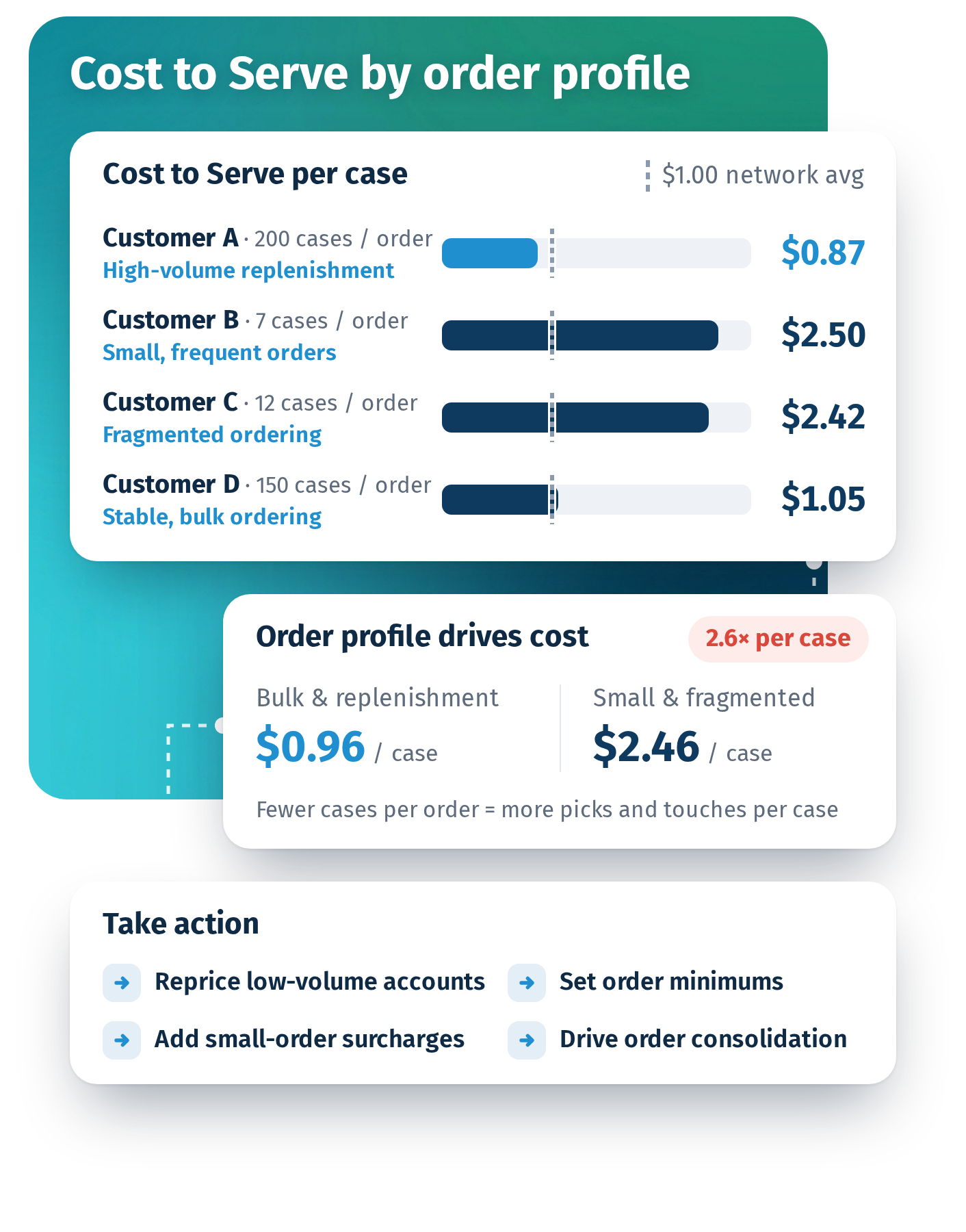
Price the order profile, not just the volume
Small, fragmented orders take more picks and touches per case than bulk replenishment, and a network average hides it. Cost to Serve shows what each customer’s order profile really costs, so you can set minimums, add surcharges or reprice with numbers that hold up.