Engineering
Put machine learning to work for labor standards
StandardOne uses historical process data to identify the variables that drive labor time and generate accurate, multi-metric standards faster.
How does AI work for labor standards?
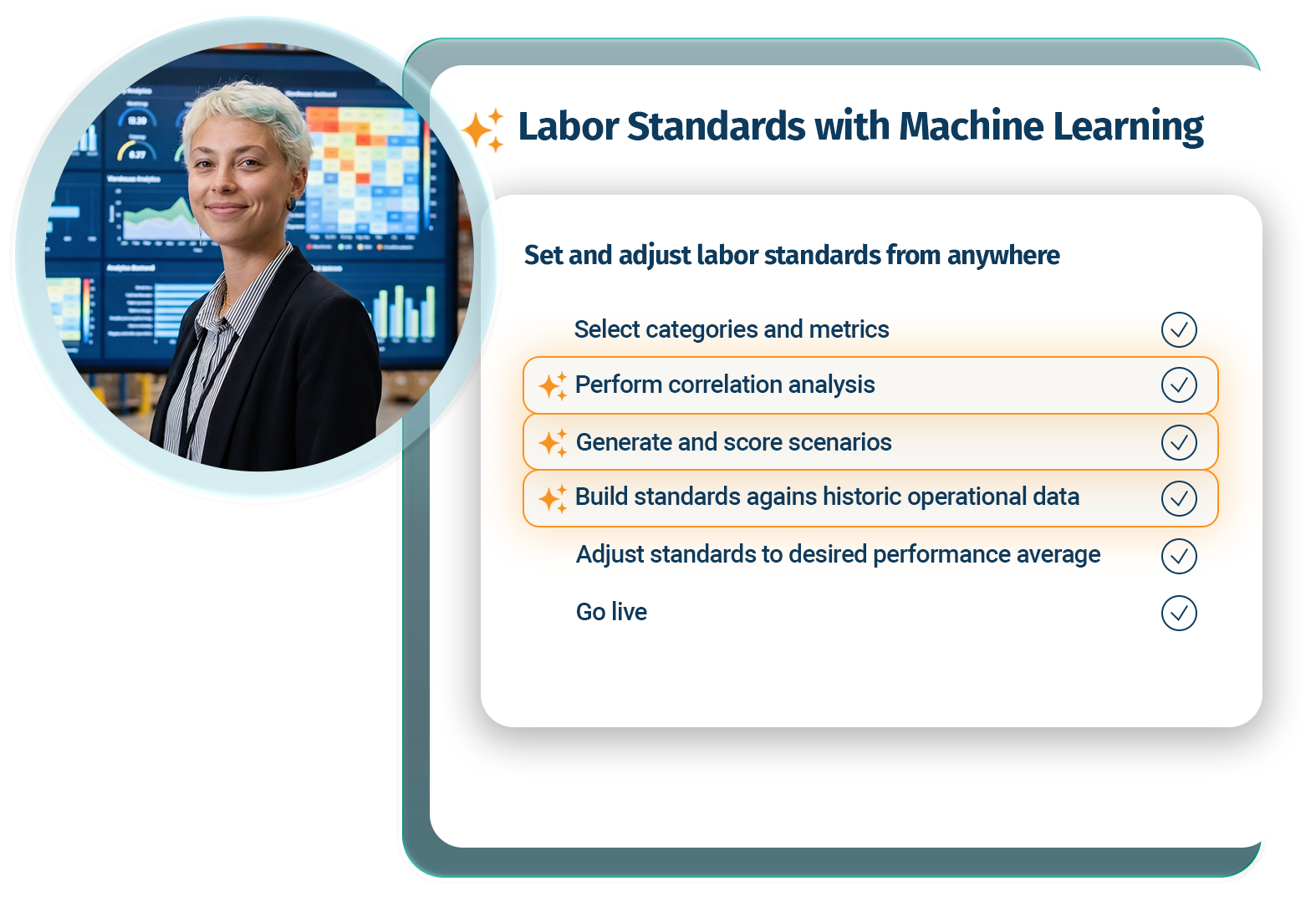
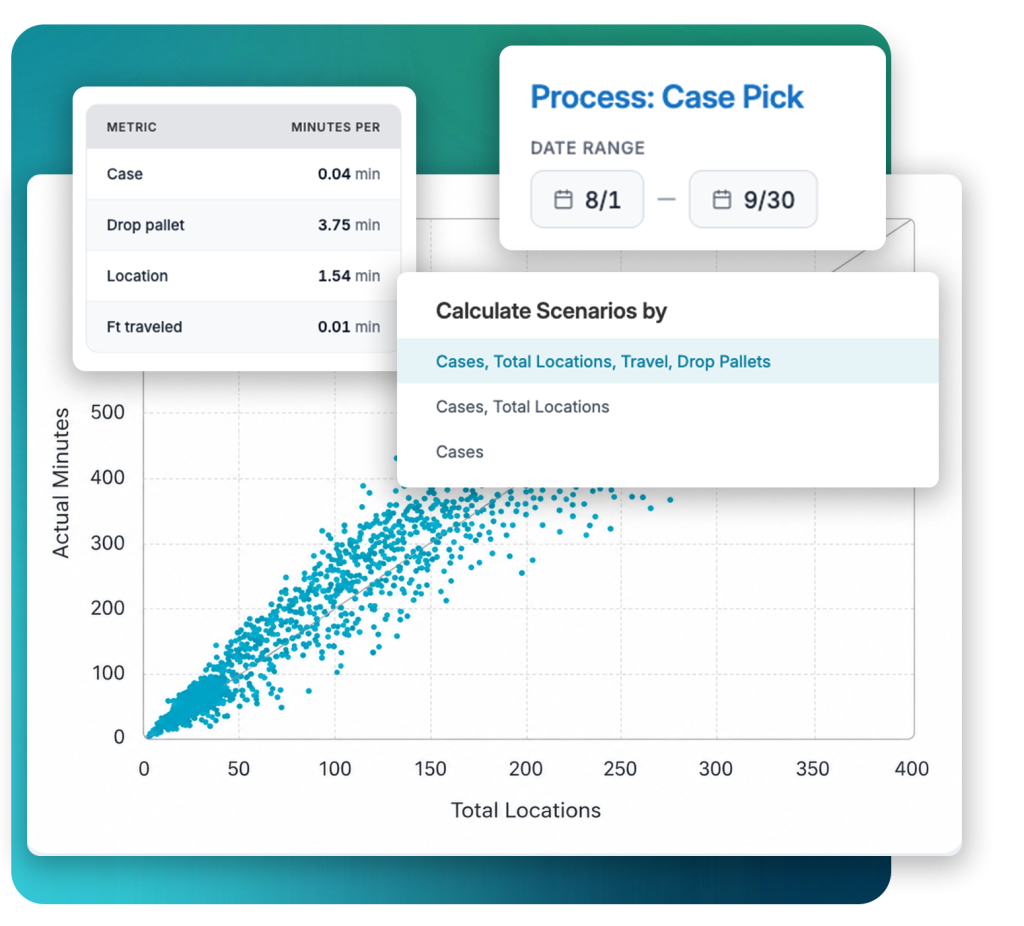
StandardOne uses machine learning to learn from how work actually gets done in your facility. It analyzes activity data for a process, measures how reliably each metric, such as cases or locations, tracks the actual time spent, and flags metrics that add noise instead of accuracy. It then runs regression models across combinations of the strongest metrics and scores each one on how well it fits the real work, so you can pick the standard that best reflects the process.
LABOR STANDARDS – StandardOne
Scale labor standards across your entire network
Traditional labor standards require specialized expertise and significant time to develop and maintain. StandardOne uses your operational data and machine learning to accelerate the process—reducing standards development time by up to 90% while giving engineers the tools to build, validate, and recalibrate accurate, multi-metric standards across the network.
- Create accurate, multi-metric standards from your operational data
- Reduce standards development time by up to 90% and recalibrate in minutes
- Extend engineering expertise across facilities with a consistent, data-driven approach
METRIC RATIOS
See what’s driving the difference
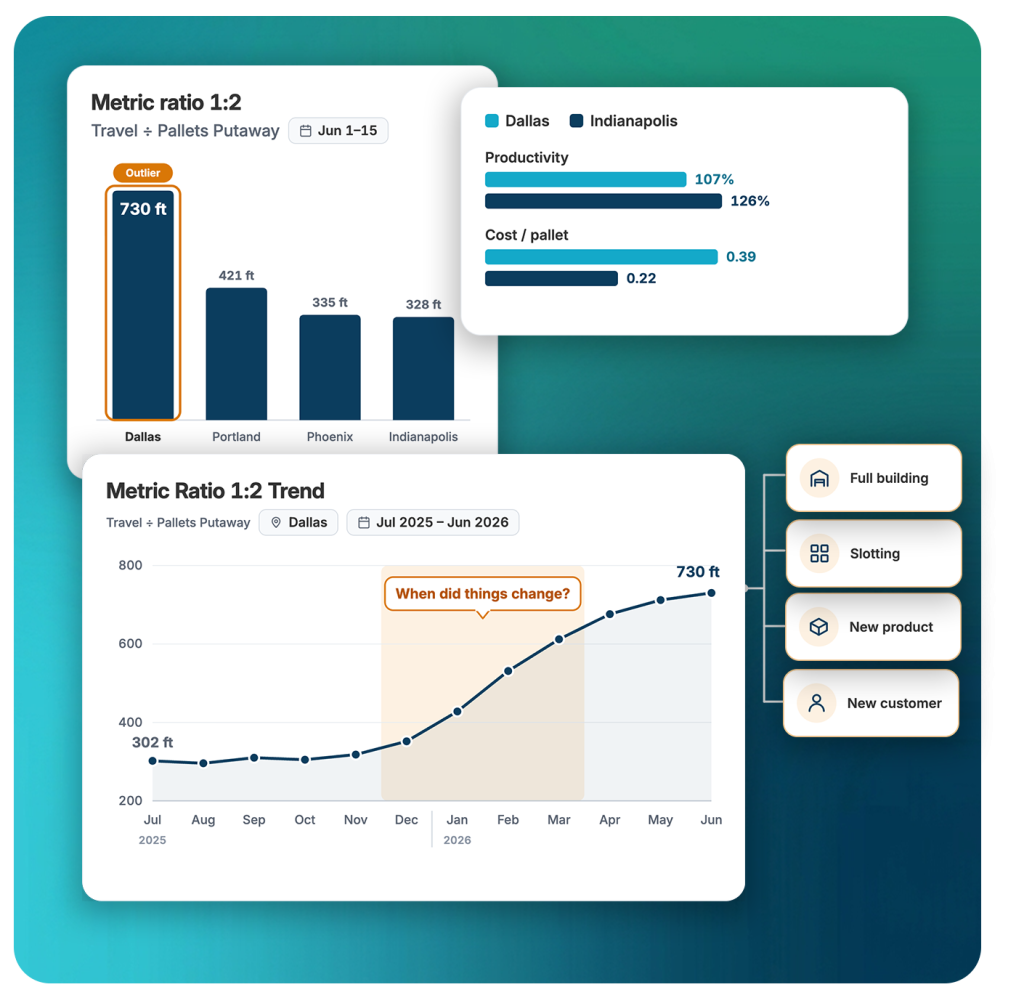
When cost or productivity changes, finding the reason can mean hours of digging through spreadsheets and WMS transactions. Metric Ratios puts cost and performance alongside the operational variables that influence them, so engineers can quickly spot outliers, explain performance differences, and find opportunities to improve.
- Compare cost and productivity against any combination of workflow metrics
- Reveal the operational variables driving performance and cost differences
- Benchmark metric ratios across facilities to uncover improvement opportunities
OPTIMAL TRAVEL ENGINE
See the path behind the standard
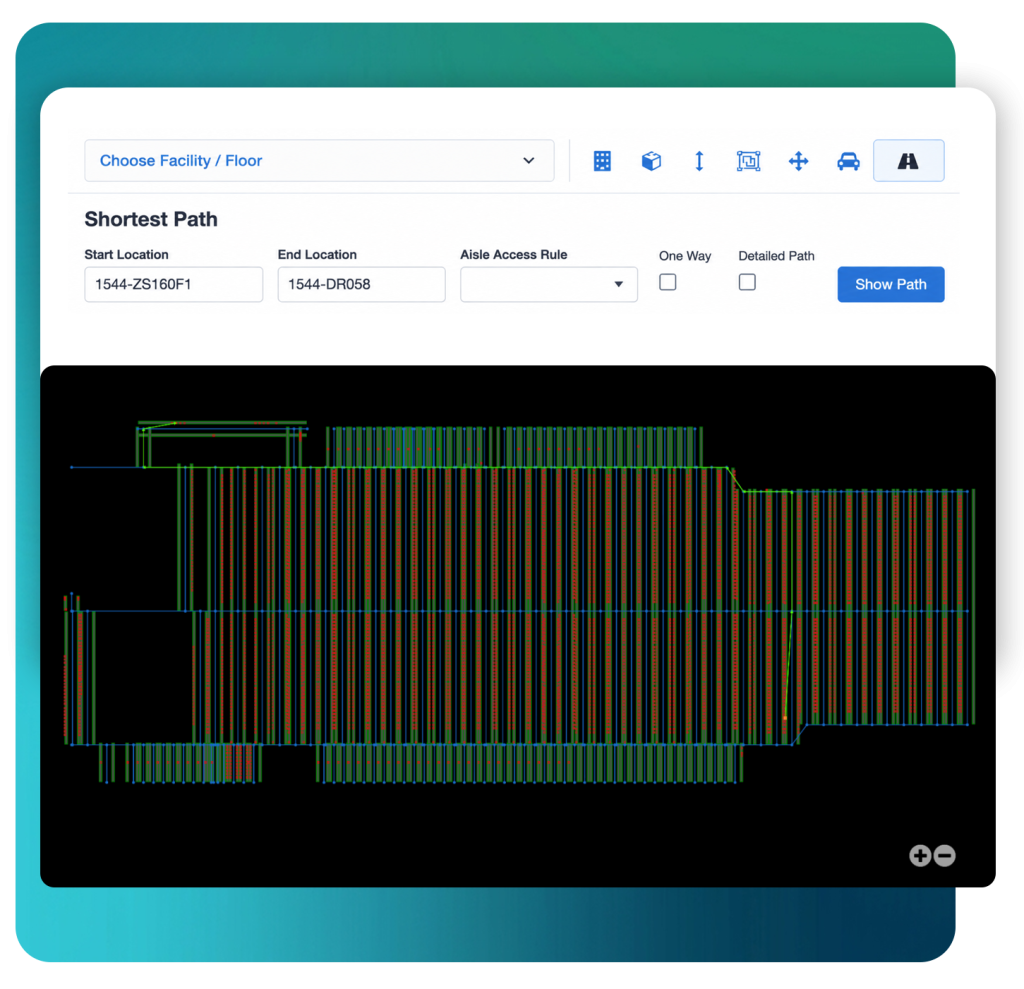
Travel can be one of the biggest drivers of a labor standard—and one of the hardest to validate. The Optimal Travel Engine maps the expected path against the route actually traveled, giving IEs a visual way to validate standards, uncover inefficient slotting or work distribution, and give supervisors a clear basis for coaching.
- Compare actual travel against the expected path for each assignment
- Identify excessive travel caused by slotting, work distribution, or route choice
- Give supervisors and associates a shared view of the ideal path