
Easy Metrics Labor Management AI powered continuous improvement
Understand where labor time and cost go, improve employee performance, plan staffing with confidence, and build data‑driven labor standards — all from one connected view of your operation.
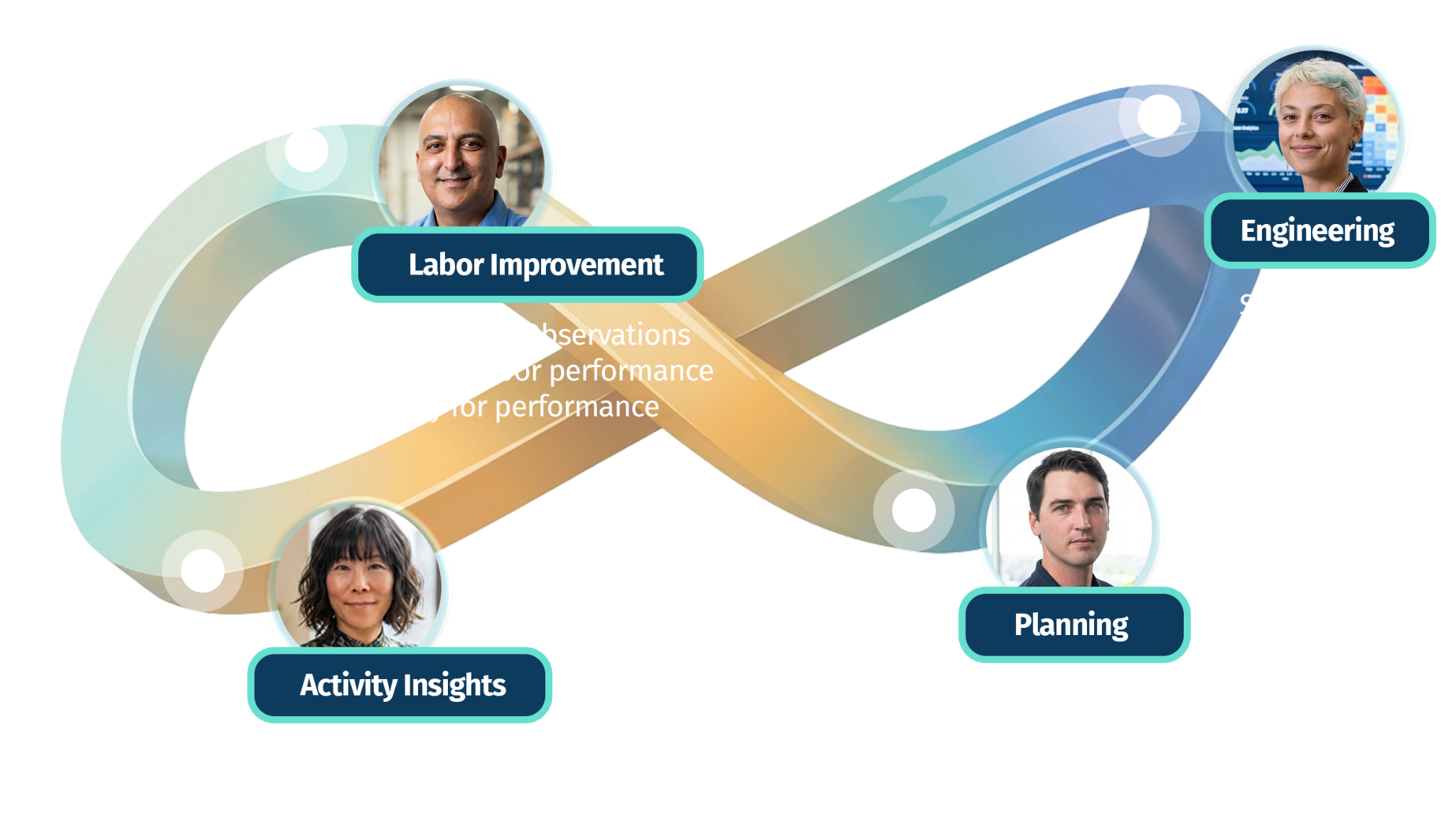
Labor Management Use Cases
Labor Improvement
Turn performance insights into daily action with focused coaching, observations, goal setting. Then manage incentives with Pay for Performance.
Activity Insights
See where labor time and cost are going across direct and indirect work. Pinpoint where the biggest opportunities exist to take action.
Planning & Forecasting
Turn historical workload and labor performance into more accurate forecasts and staffing plans, as demand changes.
Engineering
Build fair, accurate labor standards faster. Analyze what drives performance, and uncover process improvement opportunities across facilities.
Industry leaders rely on Easy Metrics to power warehouse performance


Easy Metrics has been the most user-friendly, adaptable to any WMS, best-supported form of Labor Management System I have used. The flexibility to be creative to site specific needs as well as implementation of new ideas and modifications with limited pushback or delays. I would recommend this program above any other form of LMS
Director of Labor Management
FedEx Supply Chain
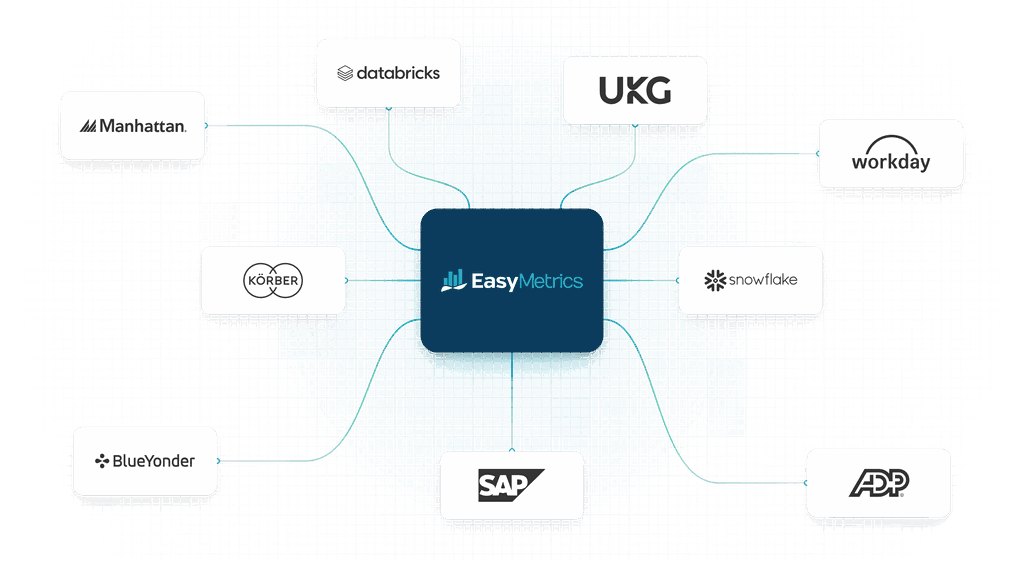
Connect every system you already run
LogicWriter® automates the data transformation that others do by hand, so you get to one trusted model in weeks, not months.
Labor Management tailored to your operation.
Schedule a demo with Easy Metrics’ warehouse operations experts. Create success your way with a plan tailored to you.
Frequently asked questions
Easy Metrics brings labor performance, activity insights, planning, engineering, and connected warehouse data together in one platform so teams can move from visibility to action without relying on disconnected reporting.
Yes. LogicWriter® connects and transforms data from the systems you already run, creating one trusted model that can support consistent labor and operational analysis across facilities.
It helps teams identify where performance and labor time can improve, then supports focused coaching, observations, goal setting, Pay for Performance, and data-driven labor standards to turn those insights into daily action.
Traditional labor standards are often static and quickly become outdated as operations change. When standards no longer reflect reality, performance measurement becomes inaccurate, and trust begins to erode. Employees lose confidence in the system when they feel they are not being measured fairly.
Easy Metrics ensures fair and accurate performance measurement by using multi-metric labor standards that reflect the true difficulty of the work being performed. These standards account for factors such as distance traveled, number of locations, cases, and pallets.
Organizations can use labor standards derived by their own engineering team, Easy Metrics StandardOne, or a combination of both. With Easy Metrics StandardOne, teams can generate labor standards in as little as five minutes using the power of machine learning and their own operational data, significantly reducing the time and cost of traditional engineering efforts.
As processes evolve, standards can be quickly recalibrated to reflect new workflows, ensuring performance expectations are defensible and aligned with reality.
Easy Metrics StandardOne can also be used alongside manually engineered standards, and is a powerful tool to validate assumptions against actual operational data.
Easy Metrics Labor Management System (LMS) reduces labor costs by making labor performance measurable, visible, and actionable across the entire workforce. Instead of relying on observation or assumptions, organizations can see exactly where time is being spent and where it is being lost.
Cost reduction is captured in several ways. First, organizations identify and reduce indirect and missing time, which can represent a significant portion of total labor but is often untracked. By making this time visible, teams can reallocate labor to productive work and eliminate waste.
Second, accurate multi-metric labor standards ensure the right amount of labor is used for the work being performed. This prevents overstaffing, reduces excess labor, and improves output per labor hour.
Third, real-time performance visibility allows supervisors to take immediate action during the shift, rather than after the fact. This improves utilization and prevents small inefficiencies from compounding into significant cost overruns.
Finally, Easy Metrics LMS enables accountability and pay-for-performance programs that increase employee engagement. Engaged employees are more productive, have fewer absences, and produce higher quality work, all of which directly reduce labor-related costs.*
The result is not just improved productivity, but measurable reductions in labor cost driven by better utilization, reduced waste, and a more engaged workforce.
Easy Metrics LMS is designed for GMs, supervisors, frontline managers, and process improvement teams responsible for driving performance on the warehouse floor.
Supervisors can identify where time is being lost, which processes are underperforming, and how individuals are performing relative to expectations. Some issues can be addressed in the moment, while others are better addressed through post-shift review, coaching, and process improvement.
For engineers and analysts, Easy Metrics LMS provides the data needed to continuously improve processes. They can analyze performance trends, identify inefficiencies in workflows, and refine how work is performed based on actual data rather than observation or assumptions.
With clear and fair performance expectations, teams can have more productive conversations, reinforce accountability, and recognize top performers. This creates a more structured, engaged team environment with less chaos and more consistency in how work is managed.
Over time, this enables continuous improvement across both people and processes, as teams better understand expectations, refine workflows, and steadily improve.