
Activity based costing for labor, and everything else in your warehouse network
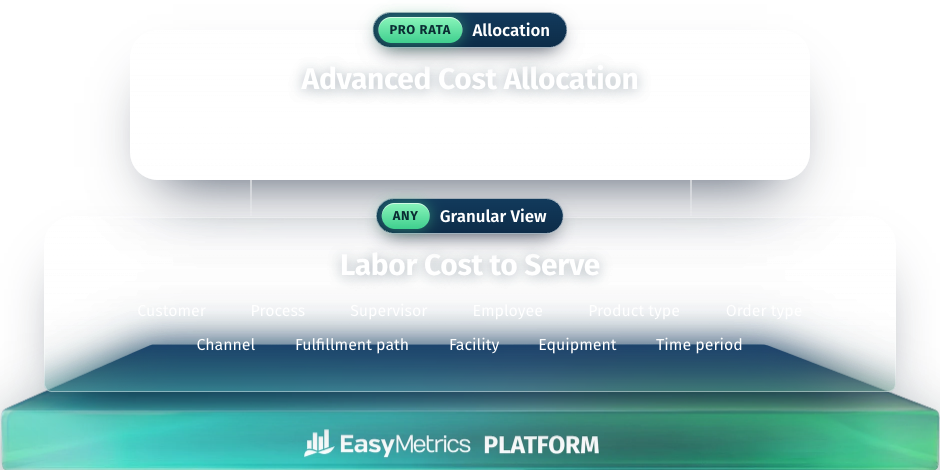
Easy Metrics labor engine exposes granular costs down to every activity.
Through Advanced Cost Allocation it captures shared costs – like robots, facility, and admin – and fairly distributes to the elements that consume them.
What can you do with true Cost to Serve?

Monitor costs in real time
Track costs as they change across your warehouse network. Drill into facilities, processes, and activities to identify what’s driving cost increases, uncover root causes, and take corrective action.

Engineer continuous improvement
Go beyond labor productivity to understand the full cost of every process. Identify opportunities to improve workflows, reduce handling costs, and measure the financial impact of process changes.

Discover profitable pricing
Understand what it truly costs to serve each customer, product family, and order profile. Identify where pricing and actual costs are misaligned, recover lost margin, and price new business with confidence.

Plan investments with confidence
Evaluate greenfield facilities, robotics, automation, and equipment investments using actual operational costs—not assumptions or averages. Build stronger business cases, forecast ROI, and measure realized value after deployment.
COST TO SERVE
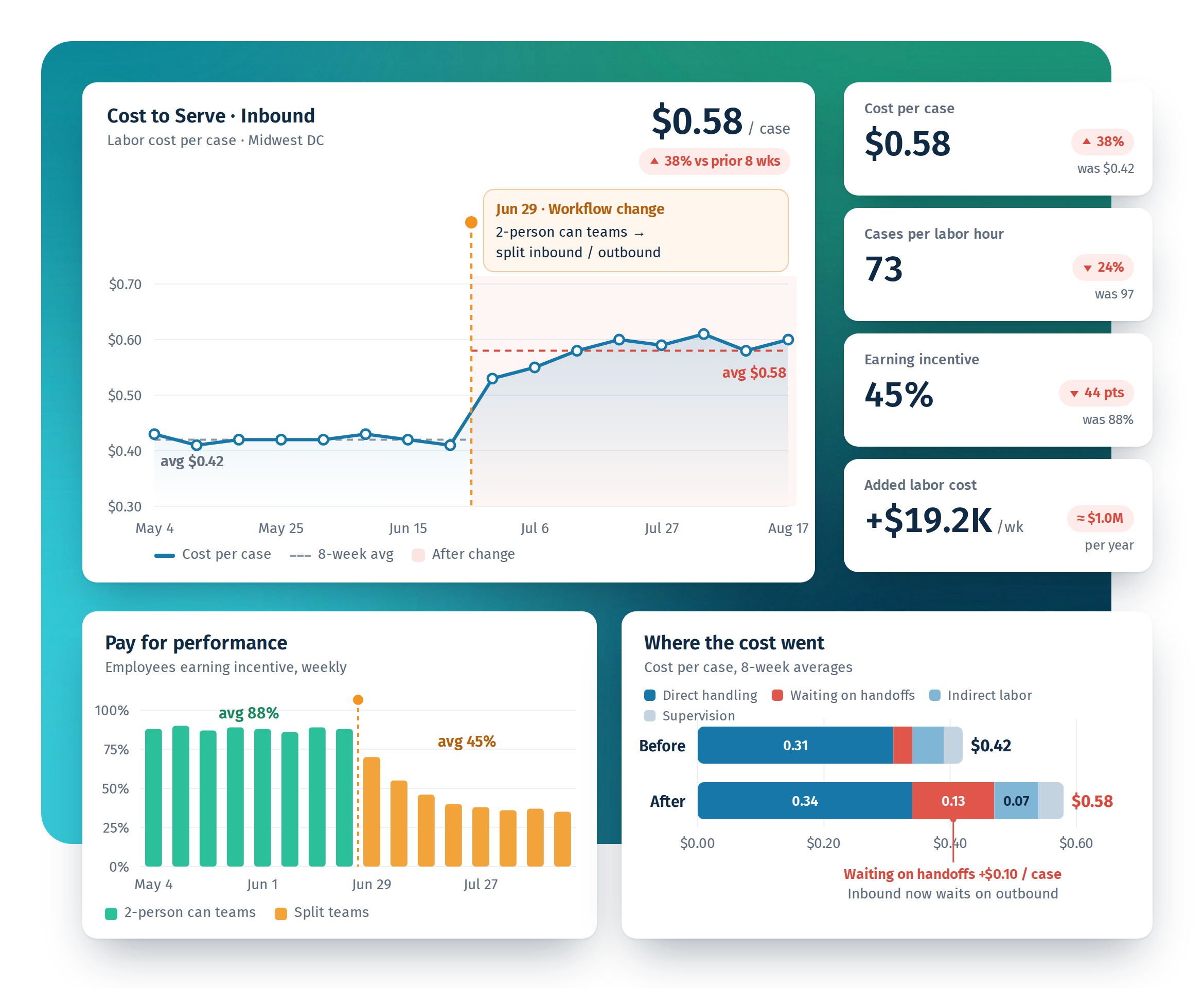
Get ahead of escalating costs before it’s too late
Changes in process or workflow can have a big financial impact that other warehouse KPIs don’t catch. Find out where costs are escalating and take action before you miss budget.
CONTINUOUS IMPROVEMENT
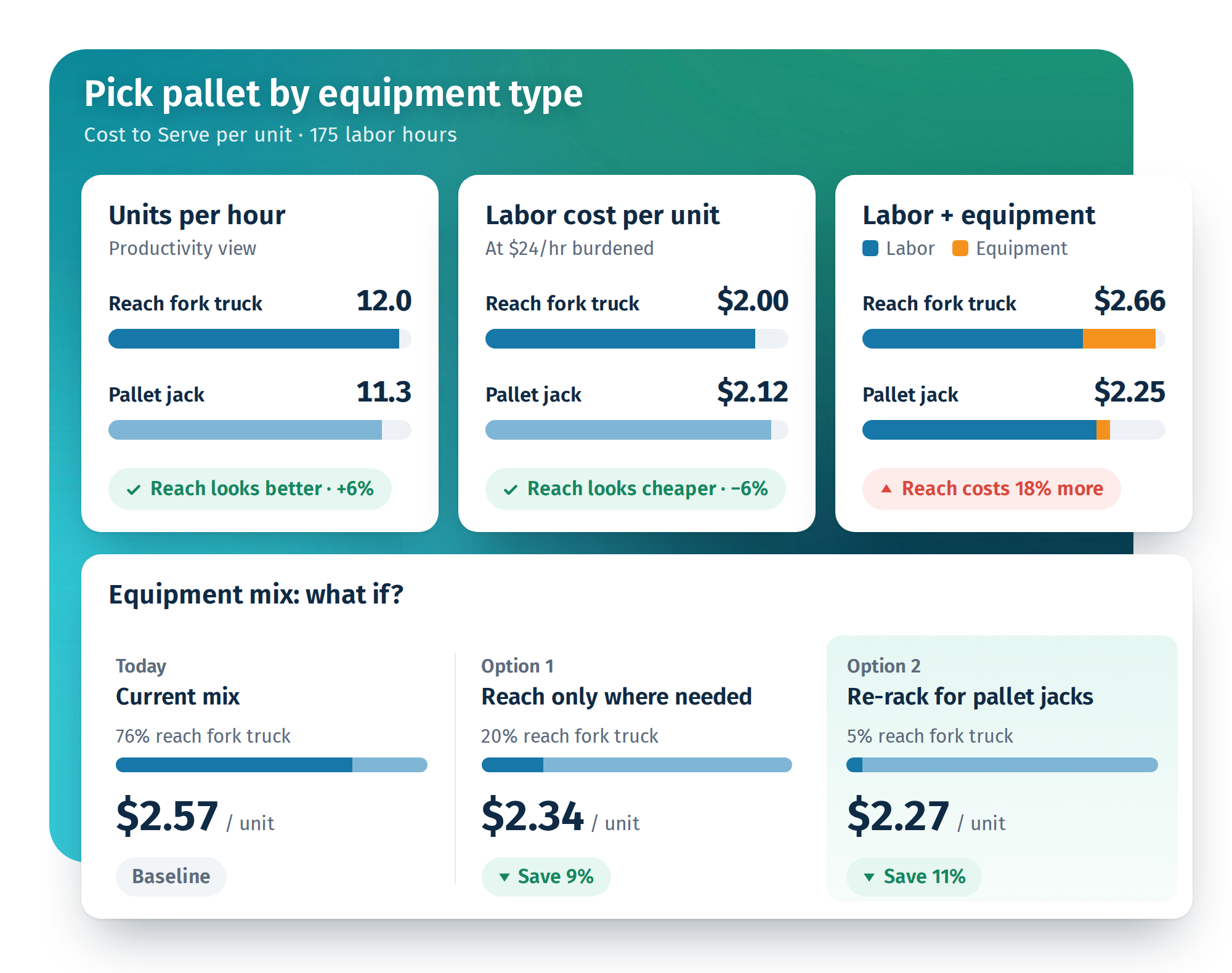
Labor cost is only half the story
Productivity alone can point continuous improvement in the wrong direction. Cost to serve analytics show engineers the true cost of each workflow, so they can pick the improvements that pay off, then measure the results after the change.
3PL PRICING
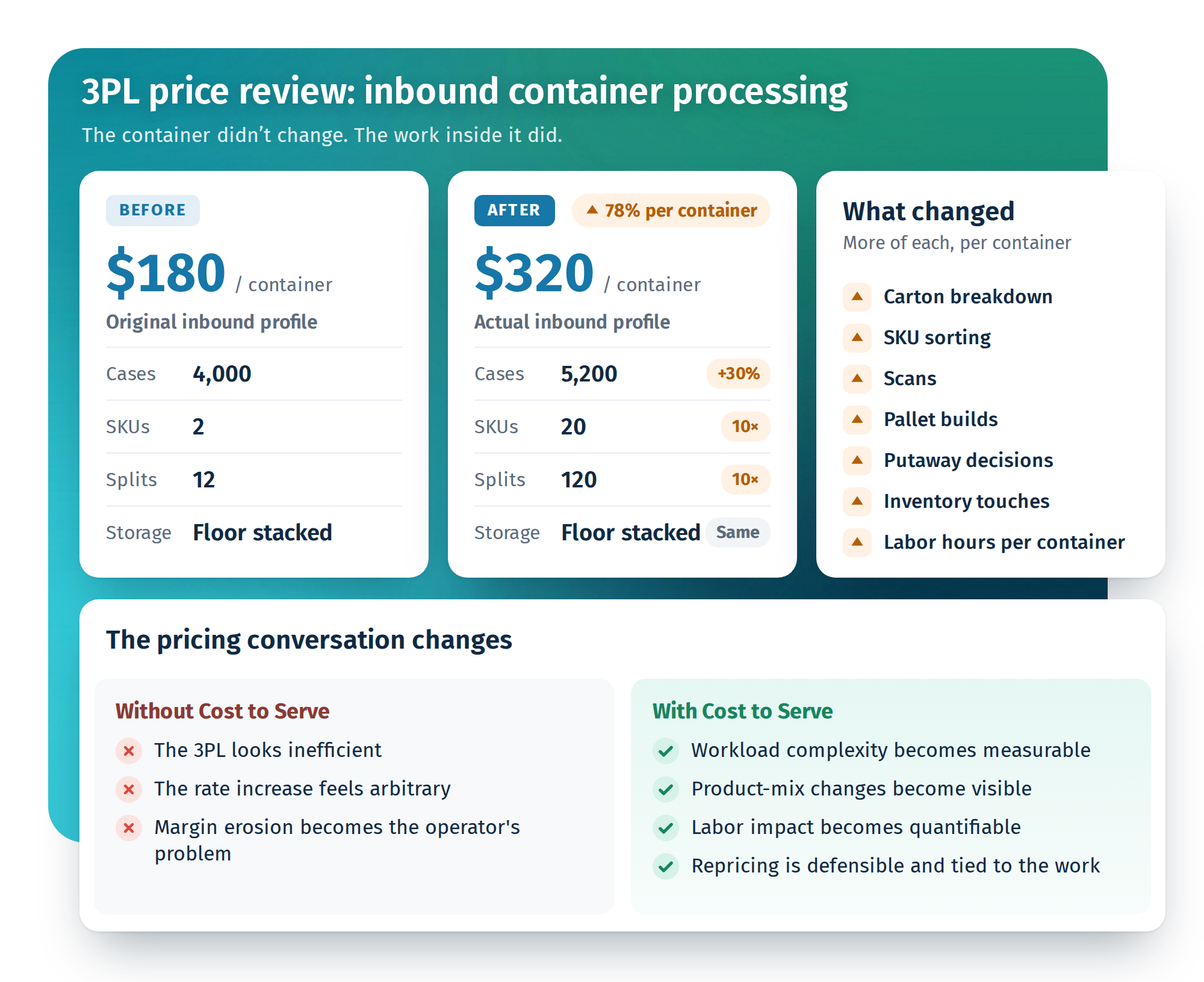
Bring the facts to the pricing conversation.
Whether you’re quoting a new customer or reviewing rates with an existing one, cost to serve ties every price to the real work behind it, so customers understand the number and you protect your margin.
WHOLESALE PRICING
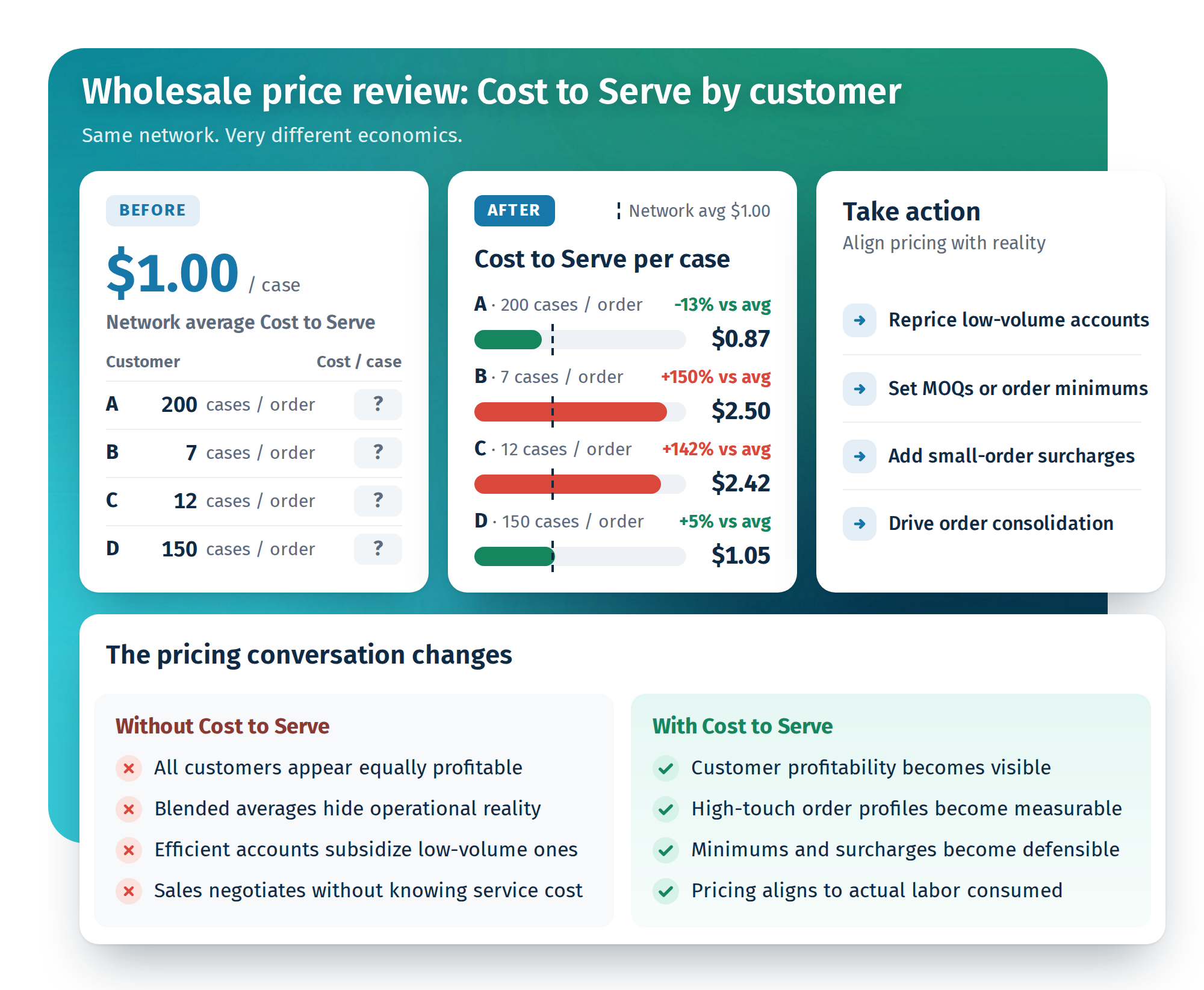
When ordering patterns change, your pricing should too
When a customer’s order profile changes, Cost to Serve shows exactly how much more labor it takes to serve them. You can walk into the conversation with facts, not assumptions, and reprice, set minimums, or reshape ordering together.
BRAND / OMNICHANNEL PRICING
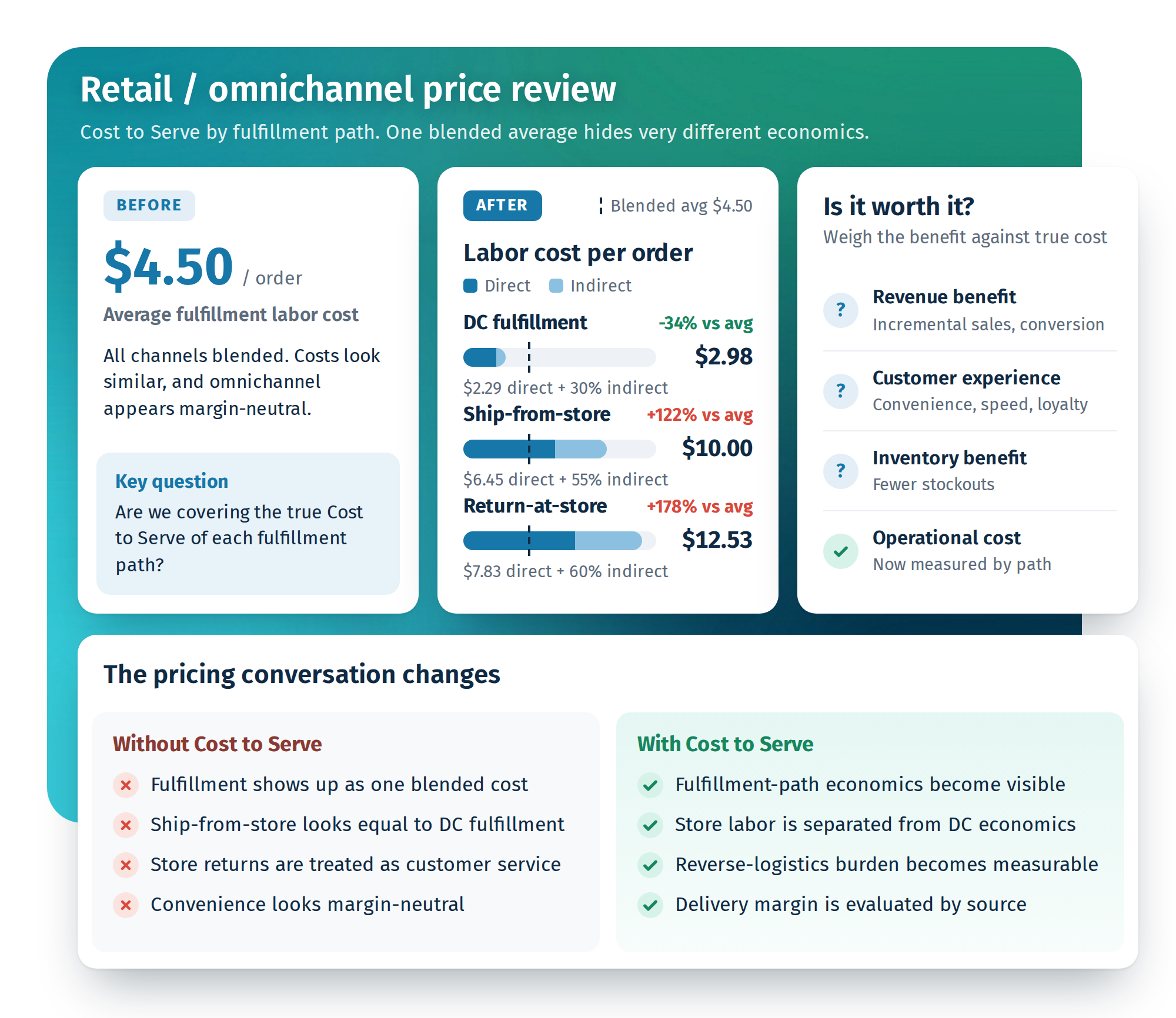
Convenience has a cost. Make sure you’re covering it
Ship-from-store and in-store returns can cost several times more to fulfill than DC orders, but a blended average hides it. Cost to Serve shows the fully loaded labor behind every fulfillment path, so you can weigh convenience and revenue against true cost, and price accordingly.
WAREHOUSE TECHNOLOGY INVESTMENTS
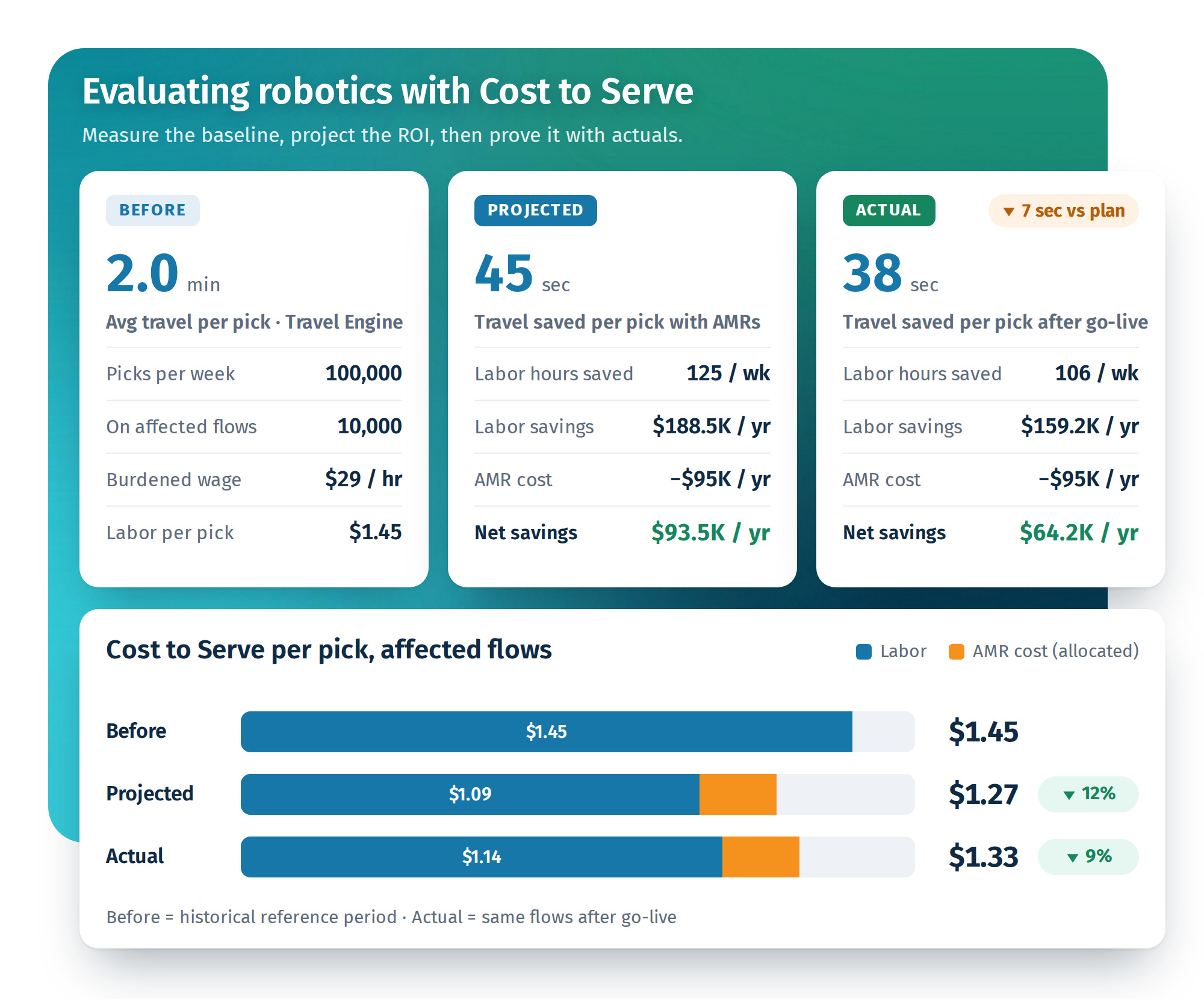
Know what robotics will save, then prove it did
Easy Metrics measures how much time your team spends walking today and what that travel costs. Use that baseline to build a realistic ROI before you invest in robots, then compare it against actual results to see exactly what you saved.