
PLANNING & FORECASTING
Put AI to work for labor planning
Easy Metrics machine learning forecasts labor needs up to 14 days ahead, so teams can plan staffing with greater confidence and adjust before overtime, excess labor, or coverage gaps become a problem.
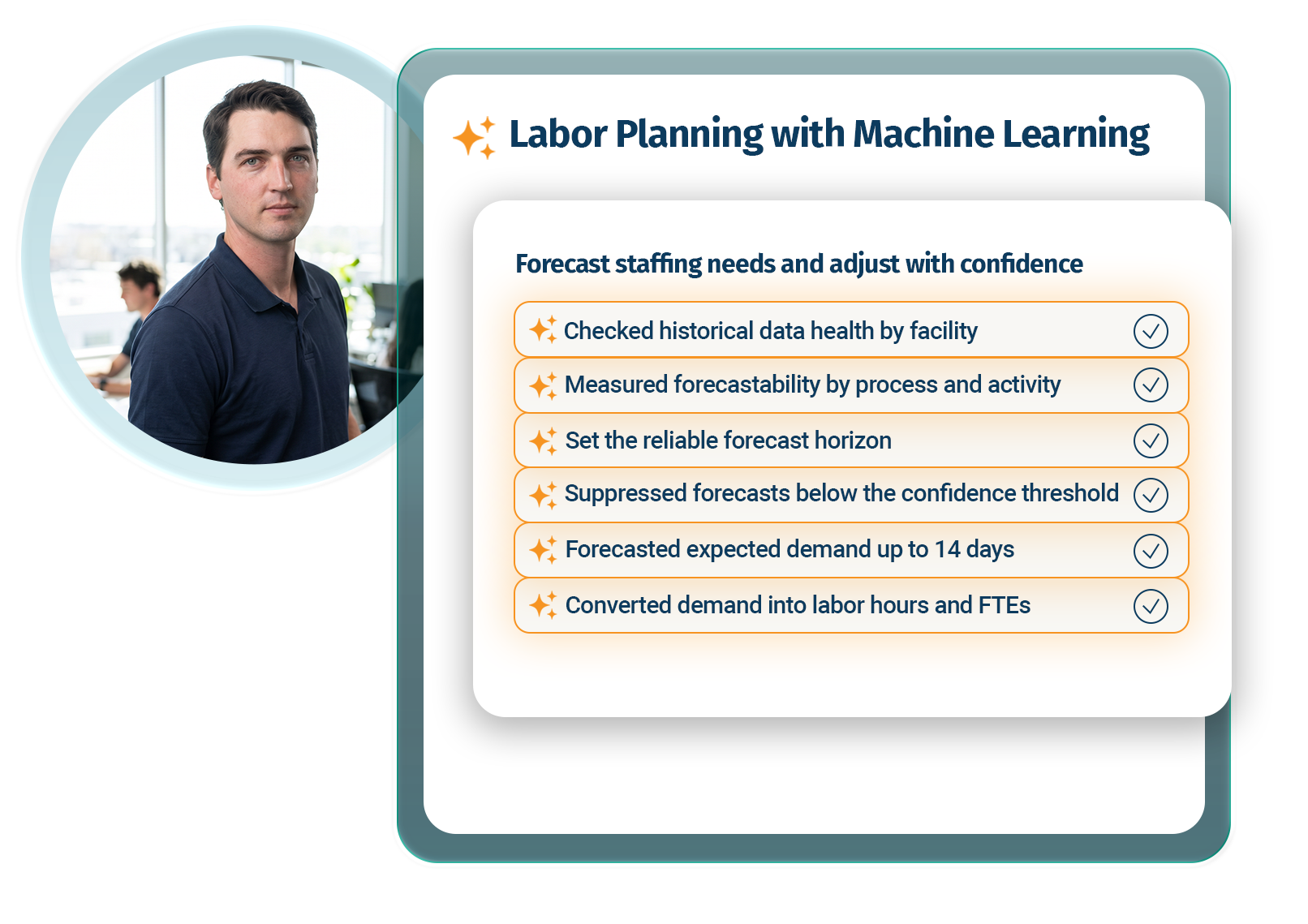
How does AI work for planning & forecasting?
Easy Metrics starts by checking whether each facility has enough healthy, predictable historical data to forecast with confidence. The machine learning engine then evaluates patterns by process and activity, determines an appropriate forecast horizon, and suppresses forecasts when the data is too variable to produce a reliable signal. For forecastable work, it predicts expected demand up to 14 days ahead and translates that demand into the labor hours and FTEs needed to build the daily plan.
LABOR PLANNING
Build the right labor plan before the day begins
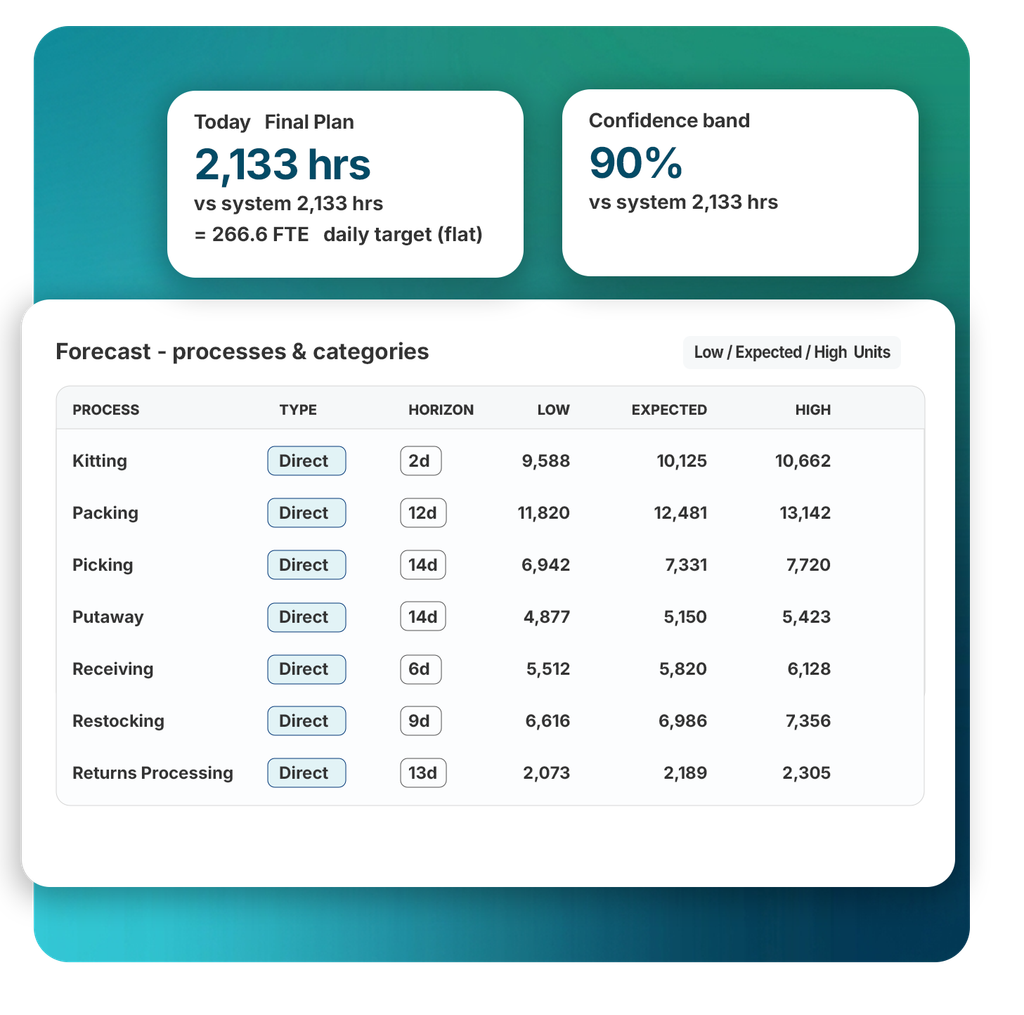
Easy Metrics turns the forecast into a daily labor plan with expected labor hours and equivalent FTEs by facility, department, process, and category. Teams can see where staffing is likely to be too high or too low before the shift starts, giving them time to adjust schedules and align labor more closely to expected demand.
- Plan expected labor hours and FTEs by facility, department, process, and category
- Reduce the risk of understaffing, overtime, and missed work
- Avoid excess scheduled labor when demand is lower than expected
INTRADAY PACE
See whether every process is on plan
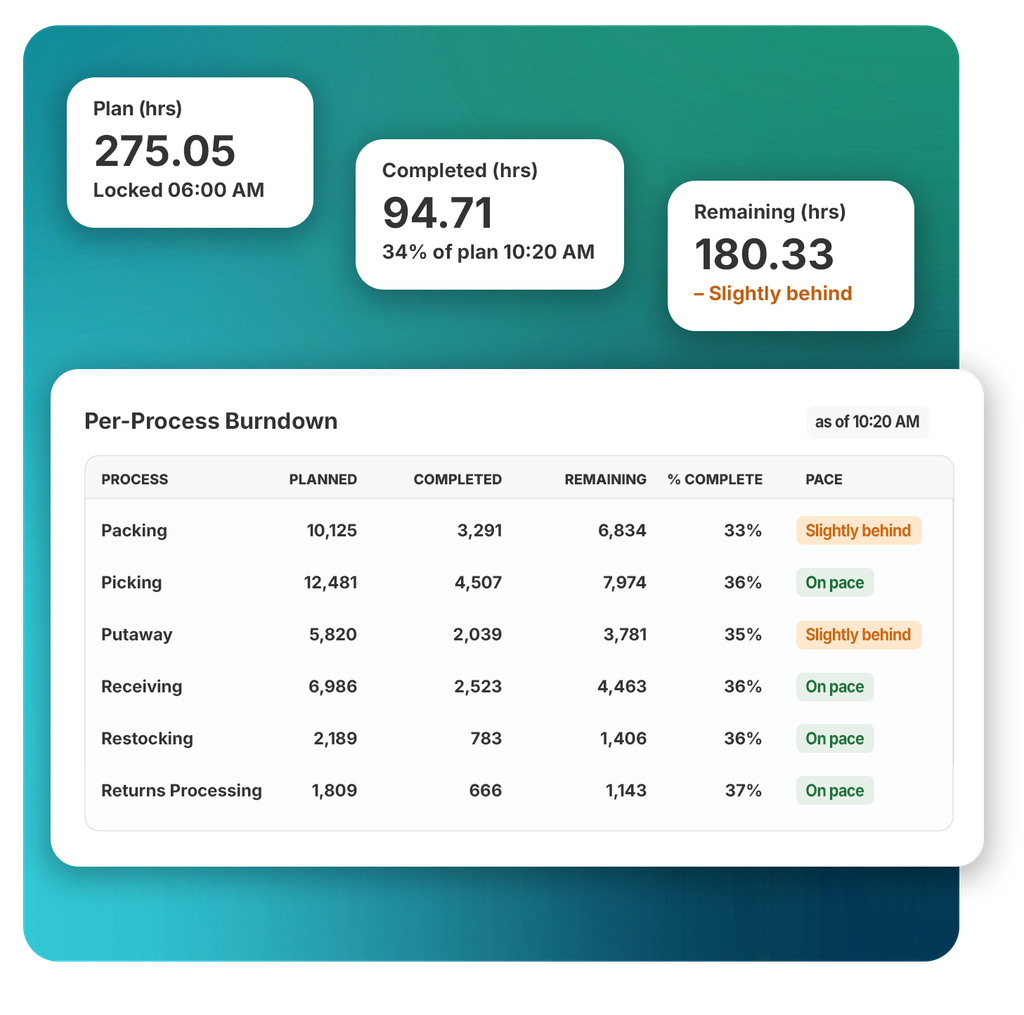
Once the day begins, Easy Metrics compares planned units with actual progress throughout the shift. A per-process burndown shows what has been completed, what remains, and whether the operation is on schedule or falling behind. That gives teams an early signal to rebalance labor or adjust work before a small gap becomes an end-of-day problem.
- Compare planned units with actual progress throughout the day
- See remaining work and pace by individual process
- Identify where labor may need to be reassigned to keep the day on plan